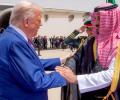
'I said, fellas, come on, let's make a deal, let's do some trading, let's not trade nuclear missiles, let's trade the things that you make so beautifully, and they both have very powerful leaders, very strong leaders, smart leaders, and it all stopped.'
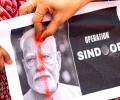
World leaders, including the UN Secretary-General and US President Donald Trump, have urged India and Pakistan to exercise restraint and seek peaceful solutions to the ongoing tensions. The calls for calm come after India conducted airstrikes in Pakistan-occupied Kashmir in response to a recent terrorist attack. Leaders from the US, Russia, UK, China, UAE, Qatar, and Japan have expressed concern over the escalating situation and emphasized the need for dialogue and de-escalation.

Pressure is mounting for a resolution to be moved in the assembly when it meets next week for its maiden sitting to demand 'restoration of Article 370 and Article 35A' as committed in the National Conference's election manifesto, reveals Mohammad Sayeed Malik, the distinguished commentator on Kashmir affairs.
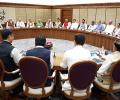
The diplomatic exercise aimed at presenting India's stance against Pakistan on terror comes in the wake of Operation Sindoor -- the Indian offensive against terror camps in Pakistan and Pakistan-occupied Kashmir following the April 22 terror attack in Pahalgam in which 26 people, mostly tourists, were killed.

The political and ideological differences between the Congress and Shashi Tharoor is no longer a matter of whispers.
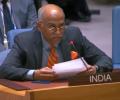
India's Permanent Representative to the UN, Ambassador Parvathaneni Harish, has sharply criticized Pakistan, calling it the "global epicenter of terrorism" and accusing it of providing state support to cross-border terrorism. Harish's remarks came in response to Pakistan's Deputy Prime Minister and Minister of Foreign Affairs Mohammed Ishaq Dar's comments on Jammu and Kashmir during a UN Security Council meeting. India highlighted that Pakistan harbors over 20 UN-listed terrorist entities and has a history of supporting groups like Jaish-e-Mohammed and Harkat Ul Mujahidin. India also emphasized that Jammu and Kashmir is an integral part of India and that Pakistan's misinformation campaign does not change the reality on the ground.
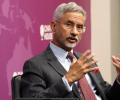
"From President Trump's perspective, the one big shared enterprise that we have is the Quad, which is an understanding where everybody pays their fair share. There are no free riders involved. So that's a good model which works," he said. The Quad alliance consists of the US, India, Australia and Japan.
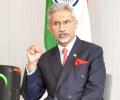
When asked whether both armies talked to each other, initiated by the Pakistani army, Jaishankar said, "Yes, we have a mechanism to talk to each other as a hotline. So, on the 10th of May, it was the Pakistani army which sent a message that they were ready to stop firing, and we responded accordingly."
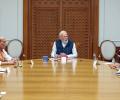
Shah briefed the prime minister on the attack and discussed the measures to be taken in its aftermath.
'Non-BJP state governments and their leaders, navigating today's political landscape, know well they have no clue what awaits around the corner.' 'The chances of charges pressed and oneself getting parked in custody play out on an uneven playing field,' points out Shyam G Menon.
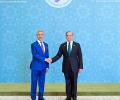
Pakistan Prime Minister Shehbaz Sharif said his country wants to resolve all issues, including Kashmir, with India through talks. He reiterated his "unwavering " support for the Kashmiri people during a speech in Muzaffarabad on the occasion of "Kashmir Solidarity Day. "
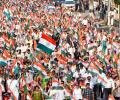
The next Census' findings will help identify the extent of India's ageing population and vulnerability levels.
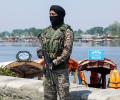
'Diplomatic and economic responses are first announced and then implemented. A military response is announced only after it is done.'
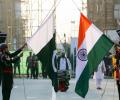
The UN Security Council will hold closed consultations on Monday on the situation between India and Pakistan after Islamabad sought an emergency meeting on the issue. Pakistan, which currently sits as a non-permanent member of the council, requested the meeting in light of rising tensions between the two countries following a terror attack in India. The meeting comes after India's foreign minister spoke with all council members except China and Pakistan, emphasizing the need to bring perpetrators of the attack to justice. The Pakistani envoy has argued that the situation in Jammu and Kashmir poses a threat to regional and international peace and security, justifying the need for a council discussion.

India on Thursday night swiftly foiled Pakistan's attempts to hit various key Indian installations including military stations at Jammu, Pathankot and Udhampur with drones and missiles, the defence ministry said.

The census will be carried out with a reference date of October 1, 2026 in snow-bound areas like Ladakh and March 1, 2027 in the rest of the country, the notification said.

The opposition Peoples' Democratic Party and Peoples' Conference targeted the ruling National Conference over the meeting, and accused it of surrendering to the Bharatiya Janata Party without even a pretence over the passage of the Waqf act.
The Kananaskis gathering on June 16-17 is the Prime Minister's 6th consecutive participation in the G7 Summit.

The CCS meet was held at the prime minister's Lok Kalyan Marg residence, a day after he held a meeting with the top military brass and accorded operational freedom to the armed forces on the "mode, targets and timing" of India's response to the April 22 attack that killed 26 people.
The sources said Misri reiterated the government's stand that the decision to stop military actions was taken at a bilateral level, as some opposition members questioned US President Donald Trump's repeated assertions about his administration's role in stopping the conflict.

The government will send seven all-party delegations to key partner countries, including members of the United Nations Security Council, later this month to convey India's message of zero tolerance against terrorism following the Pahalgam terror attack and Operation Sindoor.
India has secured international support in its fight against terrorism, with Russia, Japan, and the United Arab Emirates expressing solidarity and a commitment to working together to combat the threat. This follows a recent terrorist attack in Pahalgam, India, which claimed 26 lives. Multi-party parliamentary delegations from India briefed the leaderships of these countries on Operation Sindoor, India's response to the attack, and discussed ways to enhance cooperation in counter-terrorism and combating radicalism. These developments highlight the growing global consensus against terrorism and the importance of international collaboration to address this shared challenge.

Trump's method are more destabilising than his policy. So, a good idea these couple of years is to sip Kool-Aid, and savour the joys of Trumplomacy, asserts Shekhar Gupta.
It was said that Sharif wanted the PML-N-led coalition government to utilise all available diplomatic resources to restore peace between the two nuclear-armed states, saying he was not keen on taking an aggressive position, The Express Tribune reported.
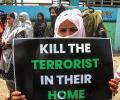
Amid rising tensions between India and Pakistan, the US has called on both countries "not to escalate" the conflict. Secretary of State Marco Rubio is expected to speak with the foreign ministers of Pakistan and India as early as today or tomorrow. The US State Department said Washington is reaching out to both India and Pakistan "regarding the Kashmir situation" and telling them "not to escalate the situation."
The Congress leaders maintained that Indian defence forces had attained complete superiority and dominance over Pakistan before the sudden "ceasefire" was announced by US President Donald Trump.
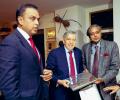
All-party parliamentary delegations on Friday met leaders and diplomats from several countries to galvanise international action against terrorists and decisively counter the tactics of those who perpetrate, support and sponsor cross-border terror activities against India.
In the wake of the recent hostilities, both sides have moved from weapons to words, with India dispatching several delegations to visit more than 30 capitals across the world. A similar effort by Pakistan is set to start on Jun 2.

Congress leader Rahul Gandhi met the family of Navy officer Lt Vinay Narwal, who was killed in the terrorist attack in Pahalgam, on Tuesday. Gandhi reached Karnal in Haryana in the afternoon and was accompanied by Congress' Rohtak MP Deepender Singh Hooda. The Congress party posted on X that Gandhi would meet the family of the Navy officer who was martyred in the Pahalgam terror attack.
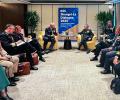
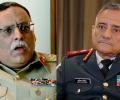
Top military officials from India and Pakistan highlighted their views at the Shangri-La Dialogue in Singapore, billed as Asia's premier defence forum, amid heightened tensions between the two sides following last month's military confrontation.
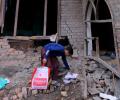
Amid escalating tensions between India and Pakistan, the US has said it will not get involved in the conflict, stressing that it is "fundamentally none of our business." While acknowledging concerns about a potential nuclear war, Vice President J D Vance emphasized that the US cannot control India and Pakistan, but can encourage them to de-escalate. The US has also reiterated its support for direct dialogue between the two countries and encouraged efforts to improve communications.
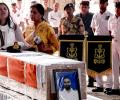
'If Pakistan's army wants to escalate violence in Kashmir, they have an unlimited supply of jihadis they can train and send. That's not an issue for them.'
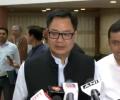
Defence Minister Rajnath Singh told an all-party meeting that at least 100 terrorists were killed in the Indian strikes on terror sites in Pakistan and Pakistan-occupied Kashmir under 'Operation Sindoor'. Leaders from various parties showed maturity and extended all support to the government and armed forces.
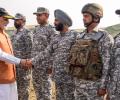
With United States President Donald Trump reiterating his claims of brokering a ceasefire between India and Pakistan, the Congress on Wednesday asked what do the 'typically loquacious' Prime Minister Narendra Modi and External Affairs Minister S Jaishankar have to say about this revelation and did they 'mortgage' India's security interests in the face of US 'pressure'.
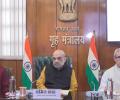
In a significant administrative reshuffle, Jammu and Kashmir Lieutenant Governor Manoj Sinha ordered the transfer and posting of 48 J-K Administrative Service (JKAS) officers, potentially creating friction with the National Conference-led government in the Union Territory. The move, seen by many as an attempt by the LG to assert control over the bureaucracy, includes the transfer of 14 additional deputy commissioners and 26 sub-divisional magistrates. The timing of the order, coinciding with the elected government's wait for approval on business rules, raises concerns over power dynamics in the region.
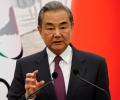
China on Tuesday called for a 'comprehensive and lasting ceasefire' between India and Pakistan, urging both countries to properly handle their differences through dialogue.
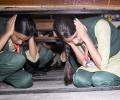
India conducted nationwide civil defence mock drills simulating multiple hostile scenarios like air raids, fire emergencies, and rescue operations across several states and union territories. The drills, dubbed 'Operation Abhyaas,' aimed to enhance emergency preparedness in light of recent terror attacks. The exercises involved coordinated efforts by various agencies, including civil defence personnel, police, fire and emergency services, and the military. Mock drills were conducted at various locations, including railway stations, malls, and high-rise buildings, showcasing the response capabilities of authorities in different emergency scenarios. The drills highlighted the importance of public awareness and cooperation in dealing with real-time emergencies.

India will conduct nationwide civil defense mock drills on Wednesday, including air-raid warning sirens and training civilians to protect themselves in the event of a "hostile attack." The drills come amid rising tensions with Pakistan following the Pahalgam terror attack. The Ministry of Home Affairs has instructed all states and union territories to participate in the exercise, which will be conducted up to the village level.
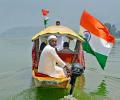
Restoration of peace and the normal routine of daily life, compared to the past, stands out as its most significant achievement, observes Mohammad Sayeed Malik, the veteran commentator on Kashmir affairs, four years after the abrogation of Article 370.

A chance meeting between Jammu and Kashmir Chief Minister Omar Abdullah and Union minister Kiren Rijiju at the Tulip Garden in Srinagar has sparked a political storm, with opposition parties accusing the National Conference of laying out a red carpet for the BJP leader in the aftermath of the Waqf Amendment Act. While NC sources termed the interaction as a purely coincidental encounter, opposition parties like the PDP and Peoples' Conference condemned the meeting, accusing the NC of surrendering to the BJP. The Waqf (Amendment) Bill, passed by Parliament last week, aims to streamline the management of Waqf properties with provisions to safeguard heritage sites and promote social welfare.
